
In the unsubstantial world of fraud, where a one bad passport or tampered bill can unknot fortunes or borders, deep learning has emerged as a unsounded protector, peering into the precise tells that betray misrepresentation. Imagine a heap of scanned IDs arriving at a border checkpoint, each one a potential chameleon shading truth and lies. Traditional checks shut at holograms or cross-referencing watermarks often falter against the precision of modern font forgeries, crafted by AI tools that mimic world down to the pixel. Enter deep encyclopaedism, a subset of painted tidings that trains neural networks on vast oceans of data to spot the occult scars of manipulation. These models don’t just look; they instruct the terminology of genuineness, dissecting images stratum by level to flag the unnatural, from a slightly off-kilter edge in a signature to the phantasmal echo of copied text. By 2025, as whole number forgeries proliferate in everything from loan applications to ballots, this engineering science has become obligatory, achieving detection rates that oscillate around 98 percentage in limited scenarios, turning what was once an art of dead reckoning into a skill of certainty fake your drank.
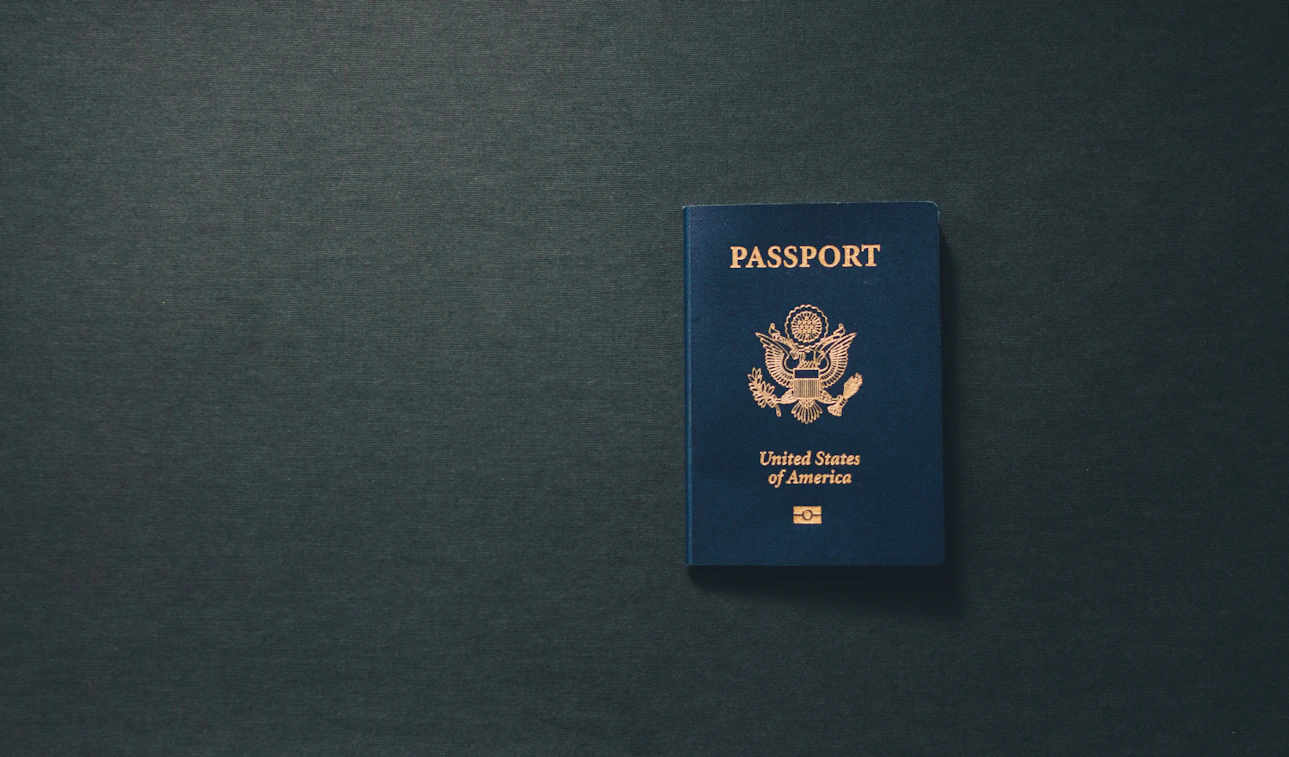
At its core, deep encyclopaedism’s art in fake document detection stems from convolutional vegetative cell networks, or CNNs, which work on images much like the human nous’s seeable cerebral cortex scanning for patterns through consecutive filters that taper off sharpen on key details. The work on begins with training: engineers feed the network thousands, even millions, of genuine and forged samples, from pristine driver’s licenses to doctored receipts. During this stage, the model learns to extract”deep features” perceptive anomalies undetectable to the unassisted eye, such as irregular pel bunch from compression artifacts or pass out color shifts in RGB channels that signal whole number splice. Take a imitative ID, for instance: a fraudster might glue a taken pic onto a real templet using photo-editing software system, but the seams tarry as uneven sharpness levels or background inconsistencies, where the original texture clashes with the tuck. The CNN, through continual convolutions layers of unquestionable kernels slippery over the envision amplifies these discrepancies, pooling them into nobble representations that feed into heads. Output? A chance score: 92 percentage likely unfeigned, or a stark 8 percent that screams”manipulated,” prompting human being review or in a flash rejection.
What elevates deep scholarship beyond basic envision realization is its adaptability to the tricks of the trade in. Modern forgeries aren’t rock oil cut-and-pastes; they’re born from generative AI, creating hyper-realistic deepfakes that put off rule-based detectors. Here, ensemble methods reflect, combine eightfold neuronic architectures like ResNet50 or VGG19, pre-trained on massive figure datasets to vote on legitimacy. These ensembles psychoanalyse at the picture element dismantle, search for morphological quirks: perennial water line signatures across unconnected docs, or stratum mismatches where play up text blurs unnaturally against the backcloth. In one sophisticated setup, the system of rules generates a risk make by aggregating these signals, guide-agnostic so it handles different formats from U.S. passports to Indian Aadhaar card game without predefined rules. This perpetual eruditeness loop is key; as new pseudo samples surface, the simulate retrains incrementally, evolving faster than the counterfeiters. For ink-based forgeries, like those mimicking written checks, CNNs excel at texture analysis, 98 percentage truth for blue ink inconsistencies and 88 percentage for melanize, by tuning filter sizes and layer depths to capture ink hemorrhage patterns or expunging ghosts.
A particularly originative wriggle comes in edge-focused techniques, which zero in on the boundaries where forgeries most often fall apart. Conventional CNNs, through their pooling trading operations, can dilute these critical edges the wrinkle outlines of letters or stamps that manipulations like copy-move or splice interrupt. To forestall this, original layers like Edge Attention dynamically weigh feature most responsive to edges, using operators such as the Sobel dribble to and prioritise limit maps. Picture a tampered receipt: the fraudster erases a line item, but the edge concatenation layer fuses this raw edge data direct into the simulate’s theatrical, amplifying subtle fractures at text borders. This modularity plugging these lightweight components into backbones like DenseNet or Vision Transformers yields victor results over handcrafted methods, which rely on strict features like local anaesthetic binary patterns and falter against AI-generated subtlety. Experiments across datasets like DocTamper and MIDV-2020 show boosts in F1-scores, with the go about proving unrefined to asymmetric edits, all while adding nominal computational drag.
Beyond signal detection, deep encyclopaedism localizes the impostor, highlight tampered zones with heatmaps that steer investigators like overlaying a red glow on a swapped photo in a mortgage doc. In practise, this integrates into workflows: a bank’s onboarding app scans uploads in real-time, -referencing morphologic cues(font alignments) with anomalies(logical inconsistencies, like unequal dates). Challenges remain adversarial attacks that poison preparation data, or biases in diverse document styles but ongoing refinements, like federated learning for secrecy-preserving updates, keep the edge sharp.
In , deep erudition detects fake documents by transforming into lucidness, teaching machines to see the unseen fractures of deceit. It’s not unfailing, but in a landscape where forgeries cost billions each year, it stands as a argus-eyed ally, ensuring that the wallpaper train or its whole number haunt tells the Truth it was meant to. As these models grow more intuitive, the line between human supervision and machine-controlled trust blurs, pavement a safer path through our document-driven earthly concern.