
A good hair care routine is not only about choosing the right products. The order in which you apply them also matters. Whether you have straight, wavy, curly, dry, or oily hair, using hair care products pakistan in the correct sequence can help each product work more effectively. When products are layered randomly, they may feel heavy, leave buildup, or prevent other formulas from working properly.
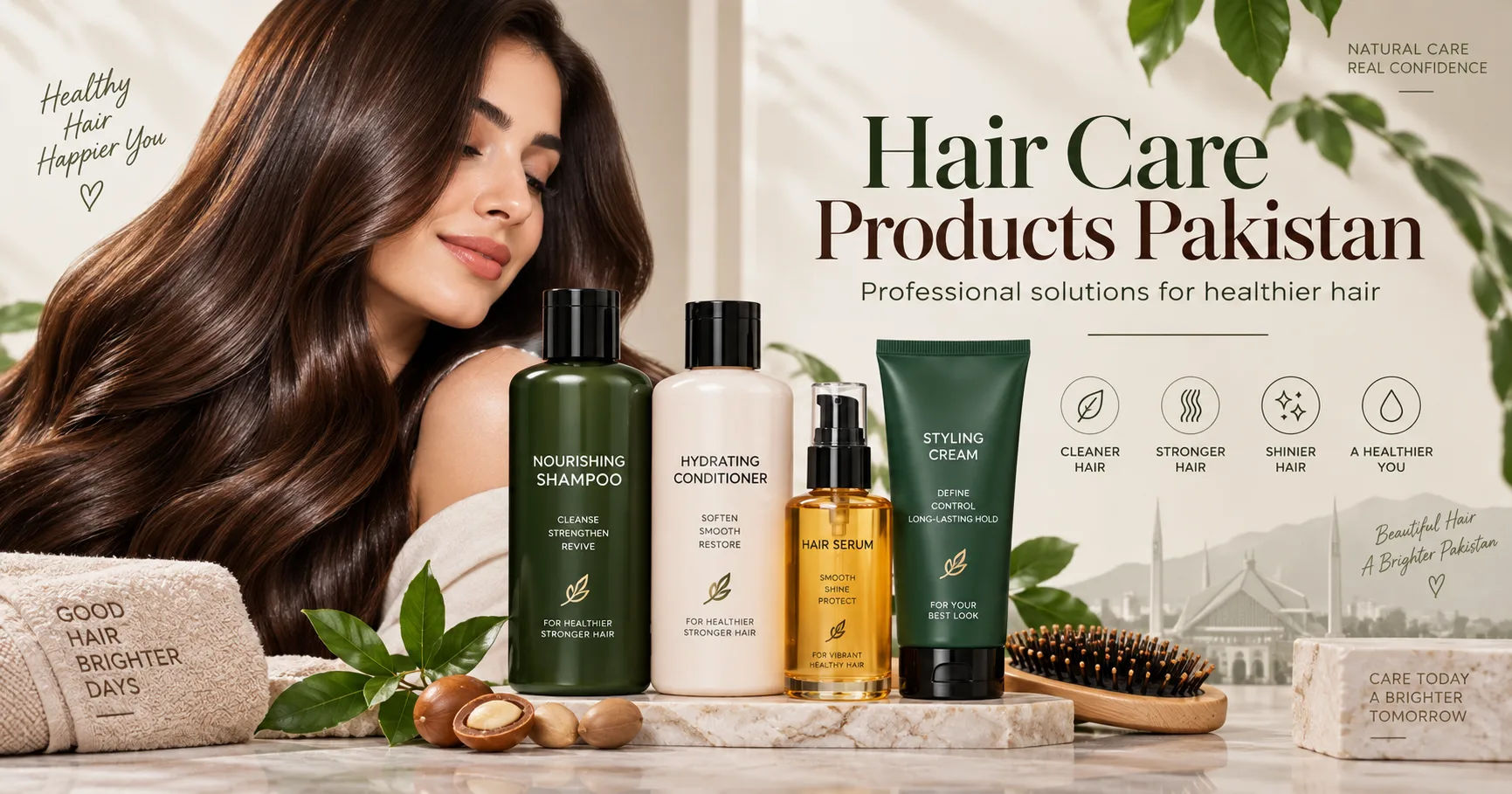
The good news is that layering hair products does not have to be complicated. You simply need to understand which products should be applied first, which ones should come later, and how much of each product your hair actually needs.
This comprehensive guide explains the correct order for layering hair products, common mistakes to avoid, and how to adjust your routine according to your hair type and the Pakistani climate.
Why Does Product Order Matter?
Hair products are designed for different purposes. Shampoo removes dirt and excess oil, conditioner adds softness, leave-in products provide moisture, and styling products help control shape, frizz, or hold.
Applying these products in the right order allows them to perform their intended functions.
For example, applying a heavy oil before a lightweight water-based leave-in treatment may prevent the lighter product from spreading evenly through the hair. Similarly, applying styling products before a leave-in conditioner can make it harder for the conditioner to distribute properly.
Layering generally works from lighter products to heavier products.
However, there is no single routine that works perfectly for everyone. Hair thickness, texture, porosity, scalp condition, and the specific formulas you use can all change the ideal order.
The Basic Hair Product Layering Rule
A simple way to remember the order is:
Cleanse → Condition → Treat → Moisturize → Style → Seal
Not every routine needs every step.
Someone with short, fine hair might only need shampoo, conditioner, and a lightweight styling product. Someone with long, dry, curly hair may benefit from several additional layers.
The goal is not to use as many products as possible. The goal is to use only what your hair needs.
Step-by-Step Guide to Layering Hair Care Products
Step 1: Start With Shampoo
Shampoo should normally be the first product in your wash-day routine.
Its main purpose is to clean the scalp and remove sweat, dirt, excess oil, and product buildup. Apply shampoo primarily to the scalp rather than aggressively scrubbing the entire length of your hair.
Massage the scalp gently with your fingertips.
The foam that moves down the lengths while rinsing is usually enough to clean the rest of the hair. Excessive shampooing or harsh scrubbing can leave the lengths feeling dry.
How Often Should You Shampoo?
There is no universal schedule.
People with oily scalps may need more frequent washing, while people with dry or curly hair may prefer less frequent washing.
Pakistan's climate can also influence your routine. Hot and humid weather can increase sweating and oiliness, while dry weather or indoor air conditioning can make hair feel less hydrated.
Choose your washing schedule according to how your scalp feels rather than following a fixed rule.
Step 2: Apply Conditioner
After shampooing, conditioner is generally the next layer.
Squeeze out excess water before applying it. This helps prevent the conditioner from becoming overly diluted.
Apply conditioner mainly from the middle of the hair toward the ends. If your scalp becomes oily easily, avoid applying large amounts directly to the roots.
Leave it on according to the product's instructions, then rinse thoroughly.
Conditioner helps improve softness and manageability, making wet hair easier to handle.
Step 3: Use a Hair Mask When Needed
A hair mask does not necessarily need to be used every wash.
Depending on the formulation, it can be used after shampooing and either instead of your regular conditioner or before conditioner if the manufacturer's directions recommend that sequence.
Hair masks are often richer than everyday conditioners.
They may be useful when hair feels particularly dry, rough, tangled, or damaged from frequent heat styling.
Don't Overuse Rich Treatments
Using too many heavy treatments can make hair limp or greasy.
If your hair is fine or naturally oily, start with a small amount and use the mask less frequently.
Thick, curly, or very dry hair may tolerate richer treatments more easily, but even then, excessive product can lead to buildup.
Layering Leave-In Hair Products
Once you have washed your hair, the layering process changes because you are working with damp or dry hair rather than rinsing products away.
Step 4: Apply Leave-In Conditioner
After gently towel-drying or squeezing excess water from your hair, apply a leave-in conditioner if your hair needs additional moisture or detangling.
Use a small amount first.
Spread it between your palms and distribute it through the lengths and ends.
A leave-in conditioner can make hair easier to comb and may help reduce the rough feeling that sometimes occurs after washing.
Avoid applying too much near the scalp unless the specific product is designed for scalp use.
Step 5: Add a Hair Serum or Lightweight Treatment
A serum can be applied after a leave-in conditioner, depending on the formula.
Hair serums may help with smoothness, shine, frizz control, and the appearance of dry ends.
A few drops can often be enough.
Warm the product between your palms and gently smooth it over the lengths and ends. Applying a large amount does not necessarily provide better results.
Water-Based vs. Oil-Based Products
Understanding the formula can make layering easier.
Lightweight, water-based products are generally easier to distribute earlier in the routine. Oils and heavier creams are often better later because they can help reduce moisture loss and add a protective layer.
However, product instructions should always take priority because formulations differ.
Layering Products for Curly and Wavy Hair
Curly and wavy hair often needs a slightly different approach because moisture and frizz control are major concerns.
Step 6: Use Curl Cream or Styling Cream
If you have wavy or curly hair, you may apply a curl cream after your leave-in conditioner.
Curl creams can provide moisture while helping define the natural pattern.
Apply the product to damp hair rather than soaking-wet hair unless the instructions recommend otherwise.
Use techniques such as scrunching to encourage curls or waves to form naturally.
Step 7: Apply Gel or Mousse
If you need stronger hold, gel or mousse can come after the cream.
Gel can help create definition and reduce frizz while helping the hairstyle maintain its shape.
Mousse is often lighter and may be preferred by people who want volume without a heavy feeling.
You do not necessarily need both.
Try one styling product first and see how your hair responds.
The Importance of Damp Hair
Many styling products work particularly well when applied while hair is damp.
If hair is completely dry, distributing creams or gels evenly can sometimes be more difficult.
On the other hand, extremely wet hair can dilute some products.
Experiment with slightly damp hair to find what works best for your texture.
Where Does Hair Oil Fit Into the Routine?
Hair oil is one of the most commonly used products in South Asian hair routines.
It can be used before washing or as a finishing product, depending on the type of oil and your goal.
Pre-Shampoo Oiling
If you enjoy oiling your hair, applying oil before shampooing is a common approach.
Massage a moderate amount into the scalp only if your scalp tolerates oil well, and apply it to the lengths if they are dry.
Leave it for the period recommended for your routine and then shampoo thoroughly.
You do not need to use a large quantity.
More oil simply means more washing may be required to remove it.
Finishing Oil
A tiny amount of oil can sometimes be used after styling to smooth dry-looking ends and add shine.
Use very little, particularly if you have fine or oily hair.
Applying too much can make freshly styled hair look greasy or flat.
Heat Protection Should Not Be Skipped
If you regularly use a blow dryer, straightener, curling iron, or other heated styling tool, heat protection deserves a place in your routine.
When Should Heat Protectant Be Applied?
Apply your heat protectant according to its instructions before using heat.
Some products are designed for damp hair before blow-drying, while others are intended for dry hair before a straightener or curling tool.
Never assume that a regular hair serum automatically provides sufficient heat protection.
Check the product label for specific heat-protection claims and temperature guidance.
How to Layer Products for Different Hair Types
The correct routine can vary considerably depending on your hair.
Fine or Oily Hair
Fine hair can become weighed down easily.
A simple routine may include shampoo, lightweight conditioner, leave-in spray, and a small amount of lightweight styling product.
Avoid applying multiple heavy creams and oils at once.
Use smaller quantities and focus richer products on the ends.
Dry Hair
Dry hair may benefit from a more moisturizing routine.
You might use a gentle shampoo, rich conditioner, occasional mask, leave-in conditioner, and a small amount of serum or oil.
The important point is to introduce products gradually rather than applying everything together.
Curly Hair
Curly hair often benefits from a leave-in conditioner followed by curl cream and then gel or mousse.
The exact combination depends on curl pattern and porosity.
If curls become greasy or lose volume, reduce the amount of cream or leave-in product.
Straight Hair
Straight hair usually does not require numerous styling layers.
A lightweight conditioner, leave-in spray, serum, or heat protectant may be enough.
Using too many products can make straight hair appear flat or oily.
How Pakistani Weather Can Affect Your Routine
Climate is an important factor when choosing and layering hair care products pakistan.
Pakistan experiences different weather conditions across regions, and many areas become very hot during summer.
Heat and humidity can increase sweating and frizz. During these periods, lightweight products may feel more comfortable.
In drier conditions, hair may need more moisture.
Summer Hair Routine
During hot weather, avoid automatically adding more oil and heavy products.
If your scalp becomes sweaty or oily, focus on keeping it clean and use lightweight conditioning products on the lengths.
If humidity causes frizz, a suitable anti-frizz serum or styling product may help.
Winter Hair Routine
Cold or dry weather can make some hair types feel rougher.
You may benefit from a richer conditioner, occasional hair mask, or a small amount of oil on dry lengths.
Again, your hair's response should determine how much product you use.
Common Hair Layering Mistakes
Using Too Many Products
More products do not automatically mean healthier hair.
Layering five or six products when you only need two or three can create buildup and make your hair difficult to manage.
Start with the basics and add products only when there is a specific reason.
Applying Too Much Product
Quantity matters.
Even a good product can make hair greasy or heavy if too much is applied.
Start with a small amount and add more only if necessary.
Putting Heavy Products First
Heavy creams and oils can make it harder for lightweight products to spread evenly.
As a general rule, begin with lighter products and move toward heavier products.
But always follow the directions on the individual product.
Applying Everything to the Scalp
Not every hair product belongs on the scalp.
Conditioners, creams, serums, and oils are often intended primarily for the lengths and ends.
If a product is specifically formulated for scalp use, follow its directions.
Ignoring Product Instructions
There is no universal layering rule that overrides the manufacturer's directions.
Some treatments need to be applied before conditioner. Others are designed to be used after washing.
Always check the label, particularly for medicated or specialized products.
How to Know If Your Routine Is Too Heavy
Your routine may contain too much product if your hair frequently feels greasy, sticky, coated, stiff, or unusually flat.
You may also notice that your hair becomes difficult to wash clean.
When this happens, simplify your routine.
For a few washes, return to shampoo and conditioner and then gradually reintroduce necessary products one at a time.
This makes it easier to identify which product is causing the problem.
A Simple Everyday Hair Care Routine
For many people, an uncomplicated routine is easier to maintain.
On wash day, begin with shampoo and conditioner.
After washing, gently remove excess water and apply a leave-in conditioner if needed.
If you use heat, apply an appropriate heat protectant.
For styling, add your preferred cream, mousse, or gel.
Finish with a tiny amount of serum or oil if your hair needs additional smoothness.
You do not need to use every product every day.
How to Build a Personalized Routine
The best routine begins by identifying your actual hair concerns.
Ask yourself whether your main issue is dryness, frizz, oiliness, breakage, tangling, lack of volume, or difficulty maintaining curls.
Then choose products that address those concerns.
For example, someone struggling mainly with dryness does not necessarily need a strong-hold styling gel. Someone dealing with oily roots may not benefit from applying heavy oil to the scalp every day.
Keep your routine simple enough that you can maintain it consistently.
Conclusion
Correctly layering hair care products pakistan is less about following a complicated formula and more about understanding what each product does. Start with cleansing, follow with conditioning, and then move toward leave-in treatments, styling products, and finishing products as needed.
Lightweight products generally work well earlier in the routine, while heavier creams and oils are often better toward the end. However, product instructions, hair type, and individual needs should always guide the final order.
Most importantly, avoid treating hair care as a competition to use the largest number of products. Healthy-looking hair usually benefits more from consistency, gentle handling, appropriate cleansing, adequate conditioning, and protection from excessive heat and mechanical damage.
Pay attention to how your hair responds after each product. If it feels soft, manageable, clean, and comfortable, your routine is probably moving in the right direction. If it feels coated, greasy, dry, or heavy, simplify the layers and reassess.
With the right approach, choosing and layering hair care products pakistan can become a straightforward part of your regular routine rather than a confusing process. The key is to understand your hair, use reasonable amounts, follow product instructions, and make changes gradually.