
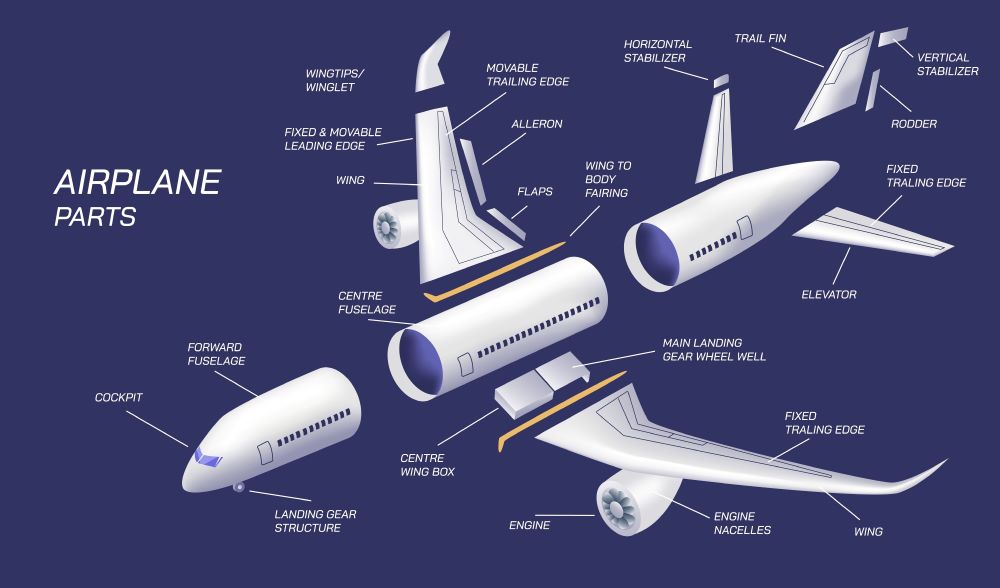
The aviation industry plays a crucial role in connecting the world, and this wouldn't be possible without the complex network of components that make up an aircraft. Aviation parts are the backbone of this industry, ensuring both the safety and efficiency of every flight. From engines to landing gear, every piece of an aircraft is engineered with precision to meet the rigorous demands of air travel.
Understanding Aviation Parts
Aviation parts are any individual components or systems that form an aircraft, enabling it to fly, operate safely, and function effectively. These parts vary widely in their function and complexity, and they are typically classified into two broad categories: airframe parts and engine parts.
-
Airframe Parts: These are the structural components of an aircraft. They include the fuselage, wings, tail, and other parts that provide support and stability during flight. Each airframe part must be carefully designed and constructed using lightweight, durable materials to withstand the forces of flight while maintaining the structural integrity of the aircraft.
-
Engine Parts: The engine is the heart of an aircraft, providing the thrust necessary for flight. Aviation engine parts include components like turbines, compressors, fuel injectors, and exhaust systems. The efficiency and reliability of an aircraft’s engine are paramount, which is why these parts are subject to stringent testing and regulations.
Other critical aviation parts include control systems (such as flight controls and avionics), landing gear, hydraulic systems, electrical systems, and fuel systems. Each of these components must work seamlessly with the others to ensure the aircraft operates smoothly.
The Role of Aviation Parts in Safety
Safety is the number one priority in aviation. Aircraft are complex machines that fly at high speeds and altitudes, so ensuring every part is in optimal condition is critical. Aviation parts undergo extensive testing, certification, and regular maintenance to ensure they function reliably under a wide range of conditions.
Parts are subject to rigorous quality control and must meet the standards set by aviation authorities such as the Federal Aviation Administration (FAA) in the United States or the European Union Aviation Safety Agency (EASA). This ensures that parts used in commercial aircraft are reliable, durable, and safe to use.
Many parts, especially engine components, are also designed with redundancy in mind. This means that multiple backup systems are in place to take over in the event of a failure, minimizing the chances of an accident or emergency.
The Lifespan of Aviation Parts
Aviation parts have varying lifespans depending on their function and material. For example, a jet engine may be serviced after every 1,000 hours of operation, while some airframe components may last much longer. However, even though parts can be designed to endure, they still require periodic inspection, repair, or replacement.
Regular maintenance checks (such as A, B, C, and D checks) are performed to inspect critical components of the aircraft. These inspections are essential in identifying any potential issues before they affect flight safety. During these checks, parts like engines, landing gear, and avionics systems are thoroughly examined, and faulty parts are replaced.
Sourcing and Manufacturing Aviation Parts
The production of aviation parts is a highly specialized field. Manufacturers must adhere to strict quality assurance processes to meet regulatory standards. Parts are typically sourced from certified suppliers who have the capability to produce components that meet the precise specifications required for aviation.
The supply chain for aviation parts is global, with manufacturers often working across borders to source raw materials, design parts, and assemble them. Once produced, parts may be shipped worldwide to airlines, maintenance organizations, and aircraft manufacturers.
Some parts are produced in-house by major airlines, while others are sourced from third-party suppliers. Because parts need to meet such specific standards, many aviation companies collaborate with experts in metallurgy, engineering, and technology to ensure that their parts are made to last.
The Future of Aviation Parts
As technology advances, the design and production of aircraft wire supplier parts continue to evolve. New materials, such as composite materials and titanium alloys, are being used to create lighter and stronger components, which can lead to improved fuel efficiency and lower operating costs. In addition, the rise of 3D printing technology is revolutionizing the way certain parts are produced, offering faster turnaround times and the potential for more customized components.
Sustainability is also a growing concern in the aviation industry. Airlines and manufacturers are working to develop more eco-friendly parts and practices. For example, companies are researching and testing biofuels and hybrid engines to reduce emissions, and parts are being designed with recyclability in mind.
Conclusion
Aviation parts are fundamental to the safety, reliability, and efficiency of modern air travel. Whether it's the engines that power aircraft, the wings that provide lift, or the landing gear that ensures a safe touch-down, each component plays a critical role. As the aviation industry continues to grow and evolve, so too will the technology and innovation behind the parts that make flight possible. From stringent safety regulations to advancements in materials and manufacturing processes, the future of aviation parts promises even safer, more sustainable air travel for years to come.