
Yes, you can often track a vehicle during nationwide auto transport, but the level of tracking available depends on the car shipping company, carrier, and technology being used. Some services provide live GPS visibility, while others offer milestone updates such as pickup, departure, arrival, and delivery notifications.This distinction matters because vehicle shipping is not exactly like tracking a package.
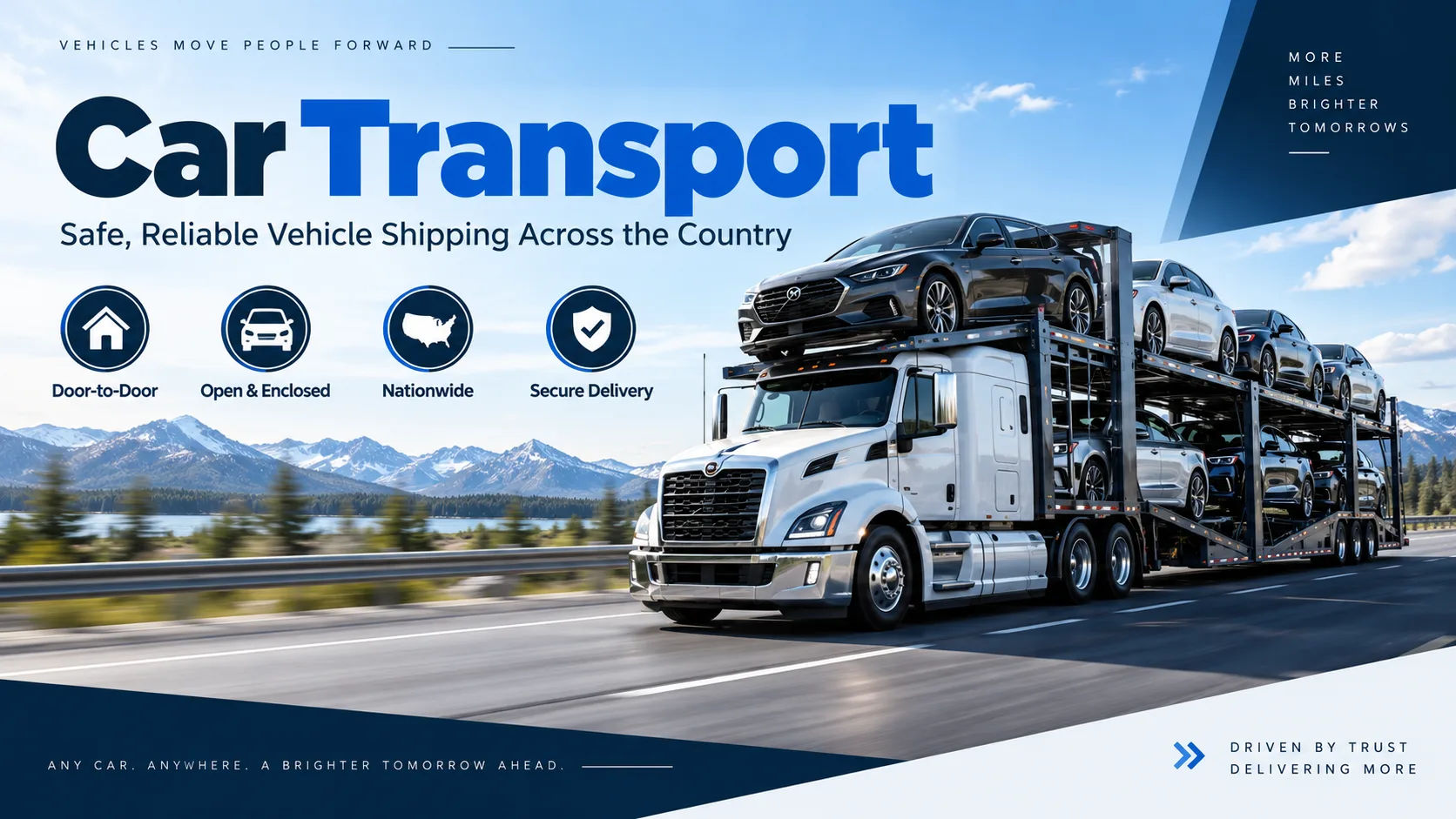
Your car may travel hundreds or thousands of miles, change highways, encounter traffic, stop for fuel, or wait at a terminal. A tracking system can give you useful visibility, but it may not always show your vehicle moving continuously on a map.
If you understand how auto transport tracking works and what questions to ask before booking, you can avoid unrealistic expectations and choose a shipping service that provides the level of visibility you actually need.
What Does Nationwide Auto Transport Tracking Mean?
Nationwide auto transport tracking refers to the ability to monitor a vehicle while it is being transported from one location to another across the country.
For example, imagine you are moving from California to Florida and need your vehicle transported separately. Once the carrier picks up your car, you naturally want to know where it is, whether it is progressing toward the destination, and when it may arrive.
Depending on the car shipping company, tracking might involve GPS technology, driver location data, phone-based tracking, or simple status updates.
The important point is that "tracking" does not always mean live tracking.
A company may use the word tracking to describe periodic updates rather than a continuously updated GPS map. Before booking, ask exactly what the tracking system provides.
How Does Car Shipping Tracking Work?
Modern vehicle tracking generally relies on GPS, mobile networks, and software.
A GPS-enabled device or application determines the carrier's location. That information is transmitted through a mobile network to a server or transportation management platform. The software then displays the location or status to authorized users.
GPS technology itself can determine a vehicle's position by receiving signals from navigation satellites. The tracking device then communicates that information through a cellular connection.
Some auto transport services use tracking information supplied by the driver's smartphone rather than a dedicated GPS device installed on the truck. Current auto transport platforms can therefore provide shipment visibility without necessarily placing a separate tracking device on the customer's vehicle.
This is one reason you should ask how tracking is actually provided instead of simply asking whether tracking is available.
What Are the Different Types of Auto Transport Tracking?
Not every car shipping company provides the same level of tracking. In general, you may encounter several different tracking methods.
Milestone Tracking
Milestone tracking is one of the simplest options.
Instead of showing the vehicle's precise location, the car shipping company provides updates when important events occur.
You may receive a notification when your vehicle is:
-
Assigned to a carrier
-
Picked up
-
Loaded for transportation
-
In transit
-
Approaching the destination
-
Delivered
This type of tracking can be perfectly adequate for many customers. You know that the shipment is progressing without needing to watch the truck's location every few minutes.
However, it does not tell you exactly where the vehicle is between those milestones.
GPS Tracking
GPS tracking provides more detailed location information.
When GPS data is available, the carrier's position can be displayed on a map. Depending on the system, updates may occur at regular intervals rather than continuously.
A GPS tracking system can potentially show the route, current position, speed, direction, and historical travel information. Vehicle tracking systems commonly combine GPS positioning with cellular communication and mapping software.
However, GPS tracking should not automatically be interpreted as perfect, uninterrupted visibility.
There can be periods when the system does not update because of poor cellular coverage, a device problem, an inactive tracking application, or other technical limitations.
Driver or Smartphone Tracking
Some modern transport platforms obtain location information from the driver's smartphone.
This can provide useful shipment visibility without requiring a dedicated tracking device. In some cases, the driver must have the appropriate application active and location services enabled.
This method can work well, but the quality of the tracking depends on the system, the driver's phone, and the way the transportation company manages location data. Recent auto transport services have begun using driver-app location data specifically for shipment tracking.
Customer Service Updates
Traditional communication still has value.
A car shipping company may not provide a live map but can give you updates directly by phone, text, or email.
For many shipments, a scheduled update from the carrier or broker can be more useful than watching a GPS dot that has not moved for several hours.
Can You Track Your Car Across the Entire Country?
In many cases, yes, but the answer depends on the tracking system used by the car shipping company.
A nationwide shipment can cross several states and major highways. GPS signals themselves are not limited to one particular state, so the geographic distance is not normally the biggest issue.
The bigger question is whether the carrier is actively providing location information to the customer.
A company may have access to a driver's location but choose to provide only selected updates. Another car shipping company may provide customers with a tracking link or online dashboard.
That is why nationwide coverage and customer-accessible tracking are two different things.
A carrier can know where its truck is without necessarily giving the customer a live map.
Why Isn't Every Auto Transport Shipment Live-Tracked?
This is one of the most common points of confusion.
People are used to package tracking services where every shipment receives a tracking number and passes through predictable scanning points. Vehicle transportation works differently.
An auto carrier may be responsible for several vehicles at once. The truck may travel long distances, make stops, encounter changing traffic conditions, and adjust its route based on operational requirements.
Furthermore, tracking technology varies between carriers. Industry sources note that many auto transport shipments do not provide customers with continuous GPS visibility, even when carriers have some form of location technology available.
Some drivers may also use tracking systems differently.
Therefore, never assume that booking with a car shipping company automatically means you will receive a live GPS link.
Ask before you book.
What Information Can Tracking Usually Show?
The amount of information available depends on the tracking system.
A basic service might only show the shipment status.
A more advanced system may show the approximate vehicle or carrier location on a map. Some platforms can also maintain historical route information.
You may be able to see whether the shipment has left the pickup area, whether it is moving toward the destination, and whether it has reached the general delivery region.
However, there is an important limitation.
Tracking the carrier does not necessarily mean the system is individually tracking your specific car.
If a transport truck carries several vehicles, the location displayed may represent the truck carrying your vehicle rather than a GPS device physically attached to your car.
A reputable car shipping company should explain this distinction clearly.
How Accurate Is Nationwide Auto Transport Tracking?
GPS location information can be highly accurate under normal conditions, but tracking should not be treated as an exact prediction of delivery time.
A map might show a truck moving along a particular highway. That does not mean you can calculate the exact delivery time simply by measuring the remaining distance.
Traffic, weather, construction, mandatory driver rest, mechanical problems, fuel stops, route changes, and loading or unloading other vehicles can all affect transportation schedules.
This is why a car shipping company may provide a delivery window rather than promising a precise arrival hour.
Tracking tells you where the shipment is or was. It does not eliminate the unpredictable parts of long-distance transportation.
What Should You Ask a Car Shipping Company Before Booking?
If tracking is important to you, ask specific questions.
Do not simply ask, "Do you have tracking?"
Instead, ask how the tracking works.
Ask whether the service provides a live map, periodic updates, or milestone notifications. Find out whether the tracking link is available to customers or only to the company's staff.
You should also ask how frequently the location information updates.
For example, a system that updates every few minutes provides a different experience from one that updates only when the driver reaches certain checkpoints.
Ask whether tracking is available throughout the entire shipment or only after pickup.
You can also ask what happens if the tracking information stops updating.
A reliable car shipping company should be able to explain the process without making vague promises.
What If Your Tracking Information Stops Updating?
Don't immediately assume that something has gone wrong.
A tracking map can remain unchanged for several hours for perfectly ordinary reasons.
The truck may be stopped for fuel, traffic, food, rest, loading, inspection, or other operational reasons.
A temporary loss of cellular connectivity can also prevent location information from reaching the tracking platform. GPS tracking systems generally depend on both positioning technology and a communications network to transmit information to a server.
If the location has not changed for an unusually long period, contact the car shipping company and request an update.
Ask when the carrier last reported its location and whether the vehicle is still on schedule.
The company should be able to provide more useful information than simply telling you to keep refreshing the tracking page.
Does Tracking Guarantee Your Car Will Arrive on Time?
No.
This is an important distinction.
Tracking improves visibility, but it does not control the transportation process.
A truck can be accurately tracked while still arriving later than originally estimated.
Likewise, a shipment can be delivered earlier than expected even if you did not receive frequent location updates.
Your delivery estimate is based on factors such as distance, route, carrier availability, traffic, weather, pickup timing, and operational conditions.
A good car shipping company should explain expected transit times while making it clear that estimates are not guarantees.
Is Tracking Worth Paying Extra For?
That depends on your situation.
If you are transporting an expensive vehicle, shipping a car across the country, or coordinating a move around your vehicle's arrival, additional tracking visibility may be valuable.
For some customers, simply knowing that the shipment has been picked up and remains on schedule is enough.
Others prefer detailed GPS visibility because it reduces uncertainty.
Before paying extra, determine what you are actually receiving.
A car shipping company offering "premium tracking" should explain whether that means live GPS, more frequent updates, dedicated customer support, or something else.
Do not pay extra merely for a label that sounds impressive.
How Can You Make Tracking Easier?
Start by keeping all shipment information in one place.
Save your booking confirmation, carrier information, pickup details, delivery address, estimated delivery window, and tracking link.
Once your vehicle is picked up, confirm that the tracking system has been activated if one was promised.
You should also keep communication open with the car shipping company.
If you need the vehicle by a particular date, communicate that requirement before transportation begins. Do not wait until the vehicle is already several states away.
Finally, remember that tracking is a communication tool, not a substitute for good planning.
Is Nationwide Auto Transport Tracking Available for Open and Enclosed Shipping?
Tracking can be available for both open and enclosed auto transport.
The type of trailer does not automatically determine whether your shipment can be tracked.
Instead, tracking generally depends on the carrier's equipment, software, driver application, and the policies of the car shipping company handling the shipment.
Open transport is commonly used for standard vehicle shipping, while enclosed transport is often selected for luxury, classic, exotic, or collectible vehicles.
If your vehicle is particularly valuable, you may want to ask more detailed questions about both tracking and communication before choosing a carrier.
What Is the Best Way to Track a Nationwide Auto Shipment?
The best approach is to combine technology with direct communication.
If a car shipping company offers genuine GPS tracking, use it to monitor general progress.
At the same time, pay attention to official status updates from the carrier or broker.
Do not become overly concerned because the tracking dot has not moved for an hour or two. Look at the broader picture.
Has the shipment been picked up?
Has the carrier confirmed that the vehicle is still in transit?
Is the estimated delivery window still reasonable?
Those questions are often more meaningful than checking the map every few minutes.
Frequently Asked Questions
Can I track my car while it is being shipped nationwide?
Yes, many auto transport services provide some form of shipment tracking. However, the level of visibility varies. Some offer live or near-live GPS information, while others provide milestone updates through text, email, phone, or an online portal.
Does every car shipping company offer live GPS tracking?
No. A car shipping company may offer status updates without providing a live GPS map. Even when GPS technology is available, customers may not receive direct access to the location data. Always confirm the exact tracking method before booking.
Can I track my car using my phone?
If your car shipping company provides a tracking portal, application, or mobile-friendly tracking link, you may be able to monitor the shipment from your phone. Some modern systems use driver smartphone location data to provide shipment visibility.
What should I do if tracking stops updating?
First, allow some time because the carrier may be stopped or temporarily outside reliable cellular coverage. If the tracking remains unchanged for an unusually long period, contact the car shipping company and request the latest carrier status.
Is GPS tracking the same as tracking my actual car?
Not necessarily. In many cases, the system tracks the transport truck or the driver's location. Your vehicle may be one of several cars being transported on that truck. Ask the car shipping company whether the tracking information represents the carrier or an individual tracking device attached to your vehicle.
Conclusion
So, can you track nationwide auto transport? Yes, in many cases, but the exact level of tracking depends on the transportation provider and carrier.
Some services provide live GPS visibility, while others rely on milestone notifications and direct communication. Modern tracking can use dedicated GPS equipment, driver smartphone applications, or transportation management platforms.
The most important thing is to understand what "tracking" means before you book. A car shipping company that offers tracking should be able to tell you whether you receive a live map, periodic location updates, or simple shipment-status notifications.
Don't assume that every shipment works like a package delivery.
For most customers, the ideal arrangement is a combination of reasonable GPS visibility and reliable communication. Tracking can give you confidence that your vehicle is progressing toward its destination, while direct updates help explain delays, stops, and changes that a map alone cannot show.
Before choosing a car shipping company, ask how often tracking updates, whether you receive direct access, what happens if the signal disappears, and whether the system tracks the carrier or your individual vehicle.
Once you know those details, you can choose a shipping service with realistic expectations and much less uncertainty throughout the journey.