
A private label clothing manufacturer helps fashion brands turn their clothing ideas into finished products that can be sold under the brand's own name. Instead of designing and producing every garment themselves, brands work with a manufacturer that handles some or most of the production process.This model is widely used by clothing startups, established fashion businesses, online stores, boutiques, and retailers.
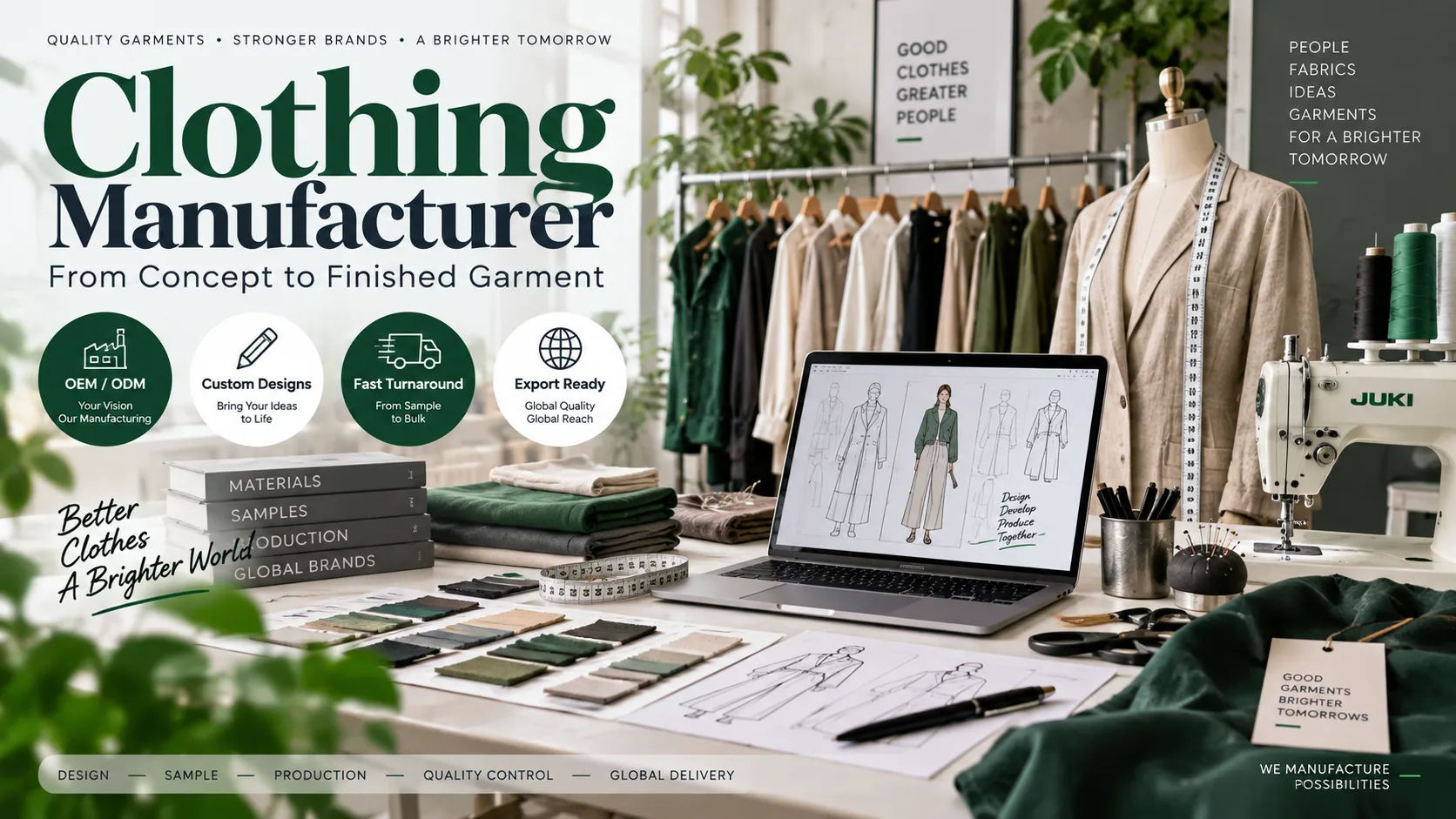
It allows a business to create products with its own branding without necessarily owning a factory or hiring a large production team.Understanding what a manufacturer actually does is important before choosing one. The work can involve fabric sourcing, pattern development, sampling, cutting, sewing, labeling, quality control, packaging, and shipping. However, the exact services vary from one manufacturer to another.
What Is Private Label Clothing?
private label clothing manufacturer refers to garments manufactured for one business and sold under that business's brand name.
For example, a fashion company may want to sell oversized hoodies with its own logo, labels, colors, and packaging. Rather than purchasing generic hoodies and adding a logo, the company can work with a manufacturer to produce garments according to its specifications.
The manufacturer handles production while the brand controls the customer-facing identity.
This gives the business greater control over the appearance and presentation of its clothing. Depending on the agreement, the brand may also have control over fabrics, measurements, stitching details, trims, colors, prints, embroidery, and packaging.
What Does a Private Label Clothing Manufacturer Actually Do?
The responsibilities can differ depending on the manufacturer and the project. Some companies offer a complete production service, while others specialize in particular stages.
A typical manufacturing relationship can begin with an idea and end with packaged clothing ready for retail or online sales.
Product Development
The process often starts with product development.
A brand may provide sketches, reference photographs, technical drawings, existing samples, or simply an idea of what it wants to make. The manufacturer then works with the brand to determine how that idea can be turned into a manufacturable garment.
This stage may involve selecting suitable fabrics, discussing construction methods, determining measurements, and identifying practical production requirements.
A good manufacturer can also point out problems before production begins. For example, a particular fabric may not work well with the intended design, or a complicated construction method may significantly increase production costs.
Fabric and Material Sourcing
Fabric selection has a major effect on the final product.
A manufacturer may source cotton, linen, polyester, denim, fleece, jersey, nylon, viscose, or blended materials depending on the garment.
They may also source supporting materials such as buttons, zippers, elastic, drawcords, thread, labels, hangtags, and packaging.
Brands should not assume that every manufacturer has access to every fabric. Some have established relationships with specific mills and suppliers, while others allow customers to provide their own materials.
The manufacturer should clearly explain fabric composition, weight, availability, minimum order requirements, and expected costs.
Pattern Making
A clothing design cannot move directly from a sketch to mass production. It needs a pattern.
Pattern making converts the design into pieces that can be cut from fabric and assembled into a garment.
The pattern determines important details such as the shape, proportions, seams, sleeve construction, neckline, pockets, and overall fit.
Manufacturers may create patterns from technical specifications or develop them from a physical reference garment.
This stage is especially important because a small measurement error can affect the fit of hundreds or thousands of garments once production begins.
Creating Samples
Before placing a large production order, brands normally need samples.
A sample gives the brand an opportunity to inspect the actual garment rather than relying only on drawings or digital designs.
The first sample may reveal issues with sizing, fabric behavior, construction, color, stitching, or overall appearance.
The brand can then request changes.
Depending on the project, several rounds of samples may be necessary before the product is approved for bulk production.
Grading Sizes
Once the basic pattern has been approved, manufacturers may grade it into different sizes.
For example, a brand selling a shirt from XS through XXL needs measurements that work across the complete size range.
Grading is not simply making the same garment larger or smaller. Different measurements need to be adjusted appropriately to maintain the intended fit.
Poor grading can make a garment fit well in one size but awkwardly in another.
Cutting the Fabric
After the patterns and materials are approved, the manufacturer can prepare the fabric for production.
Fabric is generally layered and cut according to the approved patterns.
Accuracy matters here because inefficient cutting can increase fabric waste and production costs. Inconsistent cutting can also create differences between finished garments.
Manufacturers with organized production systems typically use established cutting procedures to maintain consistency.
Garment Sewing and Assembly
Sewing is the stage most people associate with clothing manufacturing, but it is only one part of the complete process.
Workers assemble the cut fabric pieces according to the approved construction specifications.
This can include joining body panels, attaching sleeves, installing collars, adding pockets, sewing hems, inserting zippers, and completing other construction details.
Different garments require different machines and sewing techniques.
A basic T-shirt, tailored jacket, activewear garment, and denim product can have very different manufacturing requirements.
Printing and Embroidery
Many private label projects require customized decoration.
A manufacturer may offer screen printing, digital printing, sublimation, heat transfer, embroidery, or other decoration methods.
The appropriate method depends on the fabric, design, quantity, durability requirements, and desired appearance.
For example, embroidery can create a premium textured appearance, while certain printing techniques may be better for detailed graphics.
The manufacturer should confirm how artwork needs to be supplied and whether additional setup charges apply.
Adding Branding and Labels
One of the defining features of private label clothing is branding.
A manufacturer may produce custom neck labels, woven labels, printed care labels, size labels, hangtags, patches, and other branded elements.
These details help transform a manufactured garment into a product belonging to the brand.
The manufacturer may also attach barcodes, SKU labels, or other retail information if requested.
Quality Control
Quality control is another important responsibility.
Finished garments need to be checked for problems such as incorrect measurements, loose threads, damaged fabric, stitching defects, color inconsistencies, printing errors, and incorrect labels.
The level of inspection varies considerably between manufacturers.
Brands should establish quality requirements before production begins. This can include approved measurements, acceptable tolerances, fabric specifications, color standards, stitching requirements, and packaging instructions.
Quality should not be treated as something to discuss only after a problem appears.
Packaging and Preparation for Shipping
Some manufacturers also handle final packaging.
Garments may be folded, individually packed, tagged, boxed, or prepared according to the brand's requirements.
For an online clothing business, this can save considerable time because products arrive ready for inventory rather than requiring additional preparation.
The manufacturer may also arrange freight or coordinate with a logistics provider. However, shipping responsibilities should be confirmed in advance because they vary between manufacturing agreements.
What Is the Difference Between Private Label and Cut-and-Sew Manufacturing?
The terms can sometimes be confusing.
Private label describes the business relationship and branding arrangement. A brand sells products under its own name while another company manufactures them.
Cut-and-sew describes a manufacturing method in which fabric is cut and sewn into garments.
A private label project can therefore involve cut-and-sew manufacturing.
However, private label does not automatically mean that every product is completely custom. Some manufacturers offer existing garment styles that can be customized with branding, colors, materials, or other details.
Private Label vs. White Label Clothing
Private label and white label clothing are related but not identical.
With white label products, a manufacturer may produce standardized garments that can be branded and sold by different businesses.
Private label generally involves greater customization. The brand may have more control over design specifications, fabrics, measurements, trims, and other product details.
The distinction is not always used consistently across the industry, so it is better to ask a manufacturer exactly what customization is included rather than relying only on terminology.
Why Do Clothing Brands Work With Private Label Manufacturers?
There are several practical reasons.
Lower Infrastructure Requirements
Starting an in-house clothing factory requires machinery, workers, facilities, materials, production management, and quality-control systems.
Working with a manufacturer removes much of that infrastructure requirement.
A brand can concentrate more heavily on product development, marketing, sales, customer service, and business operations.
Greater Product Control
Compared with buying generic wholesale garments, private label production can provide significantly more control over the finished product.
The brand can develop its own designs and specifications rather than choosing entirely from an existing catalog.
Easier Brand Building
A recognizable clothing brand needs more than a logo.
Product fit, fabric quality, labels, packaging, colors, and design all contribute to how customers perceive the business.
Private label manufacturing gives brands an opportunity to build these details into their products.
Production Flexibility
Depending on the manufacturer's capabilities, a brand may be able to produce a small initial collection and increase quantities as demand grows.
However, minimum order quantities can vary substantially, so this should be discussed before development begins.
What Should You Ask a Private Label Clothing Manufacturer?
Choosing a manufacturer requires more than comparing the quoted price.
Ask about minimum order quantities, sample costs, production timelines, fabric sourcing, customization options, quality control, payment terms, packaging, shipping, and revision policies.
It is also useful to understand who owns the patterns and artwork created during development.
Ask how defects are handled and what happens if the delivered products do not match the approved sample.
Communication is equally important.
A manufacturer that responds clearly, documents specifications, and explains limitations is generally easier to work with than one that simply promises everything is possible.
How Long Does Clothing Manufacturing Take?
There is no single standard production timeline.
Sampling may take several weeks, while bulk manufacturing can take additional weeks depending on the product, order size, materials, factory workload, and customization requirements.
Material availability can also affect timing.
A complicated jacket with multiple components may take considerably longer to produce than a simple T-shirt.
Brands should therefore plan backward from their intended launch date rather than assuming production will happen immediately after approval.
How Much Does Private Label Clothing Manufacturing Cost?
Costs depend on many variables.
Fabric type, garment complexity, order quantity, customization, printing, embroidery, trims, packaging, labor, and shipping can all influence the final price.
A larger order may reduce the unit manufacturing cost because production becomes more efficient.
However, the cheapest quote is not automatically the best option.
If poor-quality materials or inconsistent production create returns and customer complaints, the apparent savings can disappear quickly.
A better approach is to compare the complete production package and understand exactly what is included in each quotation.
Common Mistakes Brands Make
One common mistake is moving into bulk production before approving a satisfactory sample.
A sample should be treated as an important checkpoint.
Another mistake is providing vague specifications. Words such as "premium," "oversized," or "heavyweight" can mean different things to different people.
Specific measurements, fabric compositions, weights, colors, construction details, and reference materials create much clearer expectations.
Ignoring minimum order quantities is another problem.
A manufacturer may be capable of producing a product but require an order size that does not make sense for a new business.
Finally, brands sometimes focus too heavily on manufacturing price while overlooking consistency, communication, quality control, and lead time.
What Makes a Good Manufacturer?
A reliable manufacturer should understand the technical side of clothing production and communicate realistically.
They should be willing to discuss limitations instead of agreeing to every request without explanation.
Consistency is particularly important.
A garment that looks excellent in the sample but changes noticeably during bulk production can create serious problems for a growing brand.
Good documentation also matters. Approved samples, measurements, material specifications, artwork, labels, and packaging instructions should be clear before production starts.
Conclusion
A private label clothing manufacturer does much more than sew garments. Depending on the arrangement, the manufacturer can help take a clothing concept through material sourcing, pattern development, sampling, grading, cutting, sewing, branding, quality control, packaging, and shipping.
The exact service package depends on the manufacturer, so brands should never assume that a particular service is included.
For a new clothing business, private label production can provide access to professional manufacturing without the expense of building and operating an entire factory. For established brands, it can provide additional production capacity and greater control over customized products.
The most successful relationships usually begin with clear communication. A brand should know what it wants, while the manufacturer should clearly explain what it can produce, at what quality level, in what quantity, at what cost, and within what timeframe.
Ultimately, choosing the right manufacturer is not simply about finding the lowest production price. It is about finding a production partner capable of delivering consistent garments that match the brand's specifications and give customers a product worth buying again.