
Choosing personalized work aprons is about more than adding a name or logo to a piece of clothing. A well-customized apron can represent a business, make employees look professional, improve brand recognition, and provide useful features for everyday work. From the fabric and apron style to colors, logos, names, pockets, straps, and embroidery, almost every part can be selected to match a specific workplace.
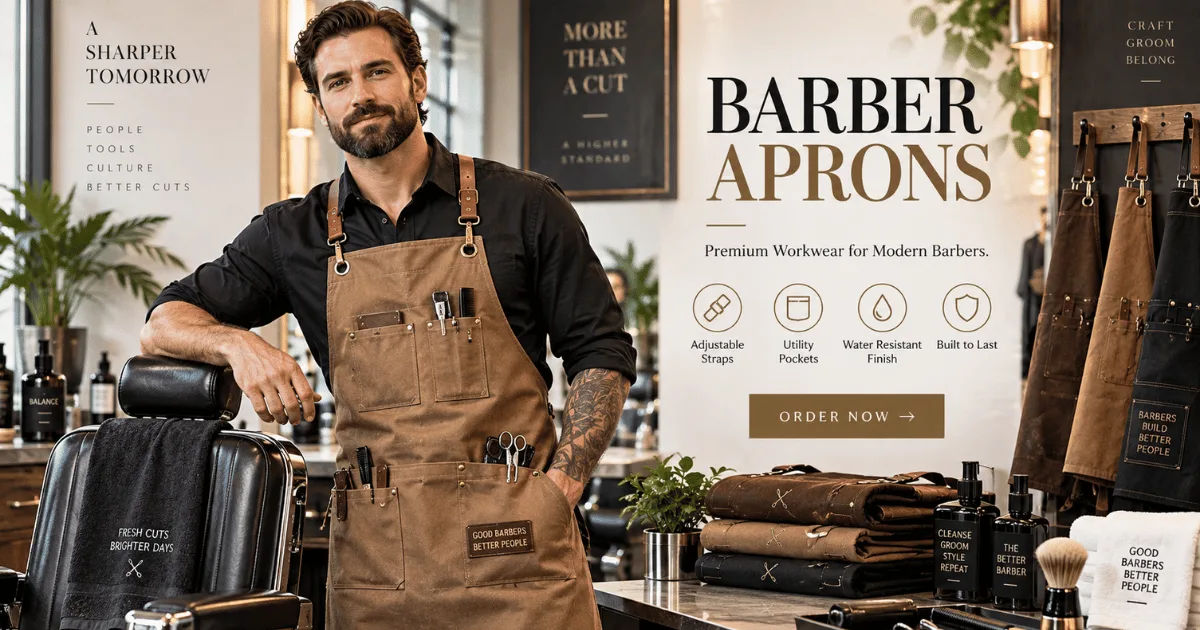
Customization also depends on how the apron will be used. A restaurant kitchen may need a durable apron with several pockets, while a salon may prefer a lighter design with a clean embroidered logo. A workshop, café, bakery, retail store, or hospitality business can all have different requirements.
Understanding the customization process makes it easier to order aprons that look professional and work well in real conditions.
What Does Personalizing a Work Apron Mean?
Personalizing a work apron means modifying an apron so it represents a particular person, business, team, or brand. The customization can be simple, such as adding an employee's name, or more detailed, such as creating a complete branded apron with a company logo, specific colors, custom pockets, and individual names.
The important point is that personalization is not limited to decoration. It can involve both the appearance and practical construction of the apron.
For example, a business might choose a particular fabric because employees work around heat or moisture. It could then select a specific color, add a logo to the chest, place the employee's name underneath it, and include extra pockets.
How Are Personalized Work Aprons Customized?
The process usually begins by deciding what the apron needs to accomplish. Once the purpose is clear, the design can be built around it.
Choosing the Apron Style
The first decision is usually the apron style.
Common choices include bib aprons, waist aprons, cross-back aprons, chef aprons, and shorter service aprons. Each style offers a different balance of coverage, comfort, and appearance.
A full bib apron provides more protection across the chest and torso. This can be useful for cooks, bakers, and other workers who regularly deal with spills or splashes.
A waist apron covers the lower body and is often used by servers, bartenders, and retail staff. It can provide a professional appearance without the extra coverage of a bib apron.
Selecting the Fabric
Fabric is one of the most important customization choices because it affects comfort, durability, appearance, and maintenance.
Cotton is popular because it feels comfortable and can be relatively breathable. Canvas provides a heavier and more rugged option for demanding environments.
Polyester and blended fabrics may be useful when easy washing, durability, and resistance to wrinkles are priorities.
The best material depends on the working environment. A person working indoors in a warm kitchen may value breathability, while someone working in a workshop may prioritize heavier construction.
Selecting Colors
Color customization is an easy way to connect an apron with a company's visual identity.
Businesses can select an apron color that matches their existing branding. A café might choose its signature color, while a restaurant could use a neutral color that creates a polished appearance.
Color can also have a practical purpose. Darker shades may make small stains less noticeable, although they do not eliminate the need for proper cleaning.
When choosing colors, businesses should consider how the color will work with the logo. A logo that looks excellent on a white background may not have enough contrast on a dark apron.
Adding Logos and Branding
One of the most common reasons businesses order personalized work aprons is to display their branding.
A logo can turn a basic apron into a recognizable part of a company's uniform. It can help employees appear more consistent and make the business easier for customers to identify.
Embroidery
Embroidery involves stitching a design directly into the fabric.
It is particularly popular for logos and names because it creates a professional and durable appearance. Embroidered designs can work especially well on thicker fabrics.
However, extremely detailed logos may need to be simplified before embroidery. Small text and complicated shapes can lose clarity when converted into stitching.
Screen Printing
Screen printing applies ink to the fabric. It can work well for larger graphics and designs containing multiple visual elements.
This option may be practical when a business wants prominent branding across several aprons.
The final appearance depends on the fabric, ink, design, and printing process. The artwork should therefore be prepared specifically for the selected apron material.
Heat Transfer
Heat-transfer customization uses a printed or cut design that is applied to the apron using heat.
It can be suitable for names, numbers, logos, and certain detailed designs. It also provides flexibility for smaller batches where traditional methods may not be as convenient.
The durability of a heat-transfer design depends on the quality of the material and application, as well as how the apron is washed and maintained.
Adding Employee Names
Personalization can go beyond business branding.
Adding individual employee names can make uniforms feel more personal while helping customers identify staff members.
For example, a restaurant could place its logo on the upper chest and the employee's name underneath it. A bakery might use the same approach for its team.
Names are usually kept relatively simple so they remain easy to read. Font selection matters because decorative lettering may look attractive but become difficult to recognize from a distance.
Customizing Pockets
Pockets are one of the most useful functional features that can be customized.
A basic apron may have one large pocket, while a customized design can include several smaller compartments.
A server might need space for a notepad, pen, order device, or small personal items. A craft worker may need compartments for tools. A chef may want practical storage without allowing the pockets to interfere with movement.
Pocket placement matters as much as pocket size. Poorly positioned pockets can become uncomfortable when sitting, bending, or moving around.
Choosing Straps and Closures
Apron straps can also be customized.
Traditional neck straps are simple and widely used, but they are not necessarily comfortable for everyone. Adjustable straps allow the wearer to change the fit.
Cross-back designs distribute some of the apron weight across the shoulders instead of relying heavily on the neck.
Waist ties can also vary in length and construction. A business ordering aprons for many employees should consider adjustability because workers will naturally have different body sizes.
Customizing the Fit
A professional-looking apron should not only carry a logo. It should fit the person wearing it.
Some manufacturers offer different sizes, while others use adjustable straps and ties to accommodate a wider range of body types.
Length and width are particularly important. An apron that is too short may provide insufficient coverage, while one that is excessively long can interfere with movement.
For businesses, a standardized design with adjustable features is often more practical than creating completely different apron patterns for every employee.
How Businesses Choose the Right Customization
The best design starts with the working environment rather than the decoration.
Restaurants and Cafés
Restaurants often prioritize durability, easy maintenance, and a professional appearance.
A restaurant may choose a bib apron with several pockets, a branded chest logo, and an employee name. A café may prefer a lighter waist or bib apron that looks stylish while remaining comfortable throughout a long shift.
Salons and Beauty Businesses
Salons often place greater emphasis on appearance and cleanliness.
A simple embroidered logo can create a polished look without making the apron visually crowded. The fabric should also be comfortable because workers may wear it for many hours.
Workshops and Trades
Workshops generally require more functional customization.
Heavy-duty fabric, reinforced stitching, larger pockets, and durable straps can be more valuable than elaborate decoration.
The logo still matters, but the apron needs to survive the working conditions first.
Retail and Hospitality
Retail employees may use aprons mainly as part of their uniform.
In this case, brand colors, logo placement, employee names, and overall consistency can be the most important considerations.
Where Should a Logo Be Placed?
Logo placement affects both visibility and comfort.
The upper chest is a common location because the logo is easy for customers to see. A smaller logo may also be placed on a pocket or lower section of the apron.
Large logos can create strong visual branding, but they should not make the apron look cluttered.
It is also worth considering how the apron folds when stored. A logo positioned directly over a frequently folded area may develop unwanted creases over time.
What Makes a Good Personalized Apron Design?
A successful design usually balances three things: appearance, practicality, and durability.
Too much decoration can make an apron look busy. Too little customization may fail to communicate the brand.
The design should also match the workplace. A rugged workshop apron and an elegant restaurant apron do not necessarily need the same materials, colors, or customization techniques.
A good rule is to customize the features that genuinely improve the apron rather than adding every available option.
What Should You Consider Before Ordering?
Before ordering personalized work aprons, consider how the aprons will actually be used.
Think about the number of employees, expected wear, washing frequency, working temperature, required coverage, pocket needs, and desired branding.
It is also useful to check the logo artwork before production. Low-resolution images can produce poor results, particularly when embroidered or printed.
Ask for a sample when possible. Seeing the actual fabric, color, logo size, and stitching can reveal problems that are difficult to notice on a digital design.
Businesses should also consider replacement requirements. If an apron becomes damaged or a new employee joins the team, it should be possible to reproduce the design consistently.
How to Maintain Customized Work Aprons
Customization does not remove the need for normal garment care.
Always follow the manufacturer's washing instructions. Excessive heat, harsh chemicals, or unsuitable washing methods can damage certain printed or embroidered designs.
Aprons used in food service may need frequent washing, so fabric durability should be considered before ordering.
It is also useful to inspect stitching, straps, pockets, and customized areas regularly. Small problems are easier to repair before they become major damage.
Why Businesses Use Personalized Work Aprons
Branded aprons can create a more consistent appearance among employees.
They can also improve brand visibility because workers naturally become moving representations of the business while interacting with customers.
For smaller businesses, an apron can be a relatively simple way to create a recognizable uniform without requiring a complicated clothing system.
Personalization can also improve team identity. Names, company logos, and coordinated colors can make employees appear organized and connected to the same workplace.
Conclusion
So, how are personalized work aprons customized? The process can involve far more than simply printing a company logo. Businesses can select the apron style, fabric, color, size, pockets, straps, closures, logo placement, embroidery, printing method, and individual employee details.
The most effective approach is to begin with the actual needs of the workplace. Consider what employees do throughout the day, how much protection they need, what they carry, how frequently the apron will be washed, and how the brand should appear.
From there, customization becomes much easier. A restaurant may need a durable bib apron with embroidered branding, while a retail team may benefit from a lightweight apron in company colors. A workshop may prioritize heavy fabric and reinforced pockets, while a salon may focus more on comfort and presentation.
Ultimately, the best customized apron is one that looks professional without sacrificing practical performance. When fabric, fit, branding, storage, and durability are considered together, the result is not just a personalized uniform. It becomes a useful part of the working environment and a consistent representation of the business.